
RFID readers,
antennas & tags.
Choose hardware for your warehouse, assets, vehicles or production line. Compare documented configurations, then discuss the read point, installation country and host system for your project.
Start with your application and country. No part number needed.
Compare 4- and 8-port readers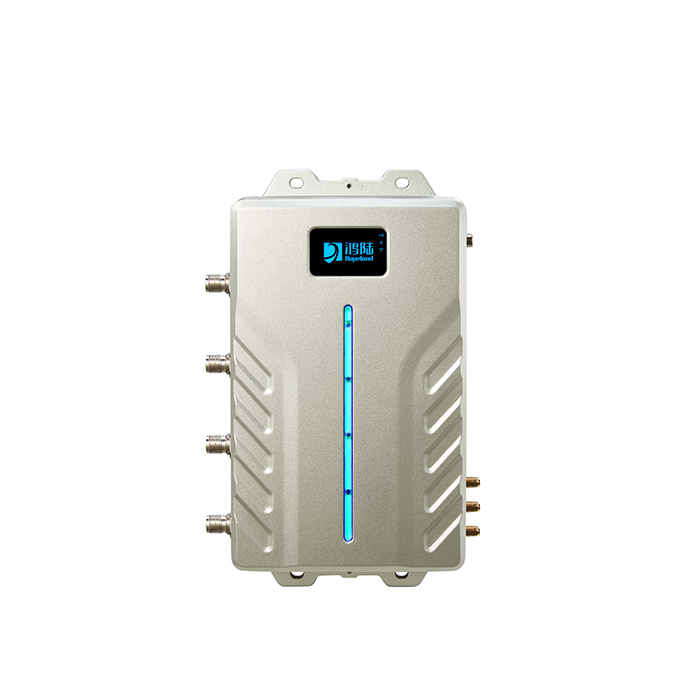
Choose the read point.
Then choose the hardware.
Start with the way you work. Choose a reader family, then match antennas and tags to your environment.
View the complete catalog ↗Fixed readers
Continuous visibility at portals, production lines and read zones.
Explore fixed readers +02Integrated readers
Reader and antenna in one device for compact installations.
Explore integrated readers +03Handheld & PDA
Bring RFID to the inventory, assets and people on the move.
Explore handheld readers +04Antennas & tags
Shape your read zone and identify what matters.
Explore antennas +One identifier.
A useful event.
Different environments. Different requirements.
One place to start a better-connected operation.
 WAREHOUSING & LOGISTICS
- 01
Share your application
What are you identifying? Where will it operate? Tell us about your read zone and regional requirements.
- 02
Match your configuration
Compare the reader, antenna, tag and interfaces together. Put your software requirements into the conversation early.
- 03
Validate in the real world
Test with your actual materials and operating conditions before you scale deployment.
Which RFID reader is right for my project?+
Use a fixed reader with external antennas for controlled read zones such as dock doors. An integrated reader combines the antenna and reader for a compact installation. A handheld reader is useful for mobile inventory and asset checks. Share your read distance, tagged material, region and software requirements so we can narrow the options.
Can UHF RFID read tags without line of sight?+
UHF RFID uses radio waves rather than an optical scan, so direct line of sight is not always required. Metal, liquids, tag orientation and interference affect performance. Validate the reader, antenna and tag together under your actual operating conditions.
What should I include in a request for quotation?+
Include the application, installation country, estimated quantity, read distance, tag or asset material, interfaces and software environment. If available, add a layout or describe the read zone. These details help the team recommend a suitable configuration and prepare a quotation.
Are all RFID products suitable for every country?+
No. Frequency allocations and approvals vary by country. Confirm the regional frequency configuration and applicable regulatory requirements for the exact model before ordering or deployment.
Let’s find the right fit.
Tell us what you need to identify, where it operates and how it connects. We’ll help you choose the hardware.